Two Numbers, Endless Confusion
"Is 120s better than 80s?" It is one of the most common questions in fabric sourcing, and the honest answer depends on what you are buying. Yarn count and thread count measure different things, and marketing copy frequently blurs the line between them. This guide untangles both.
Yarn Count: How Fine Is Each Yarn
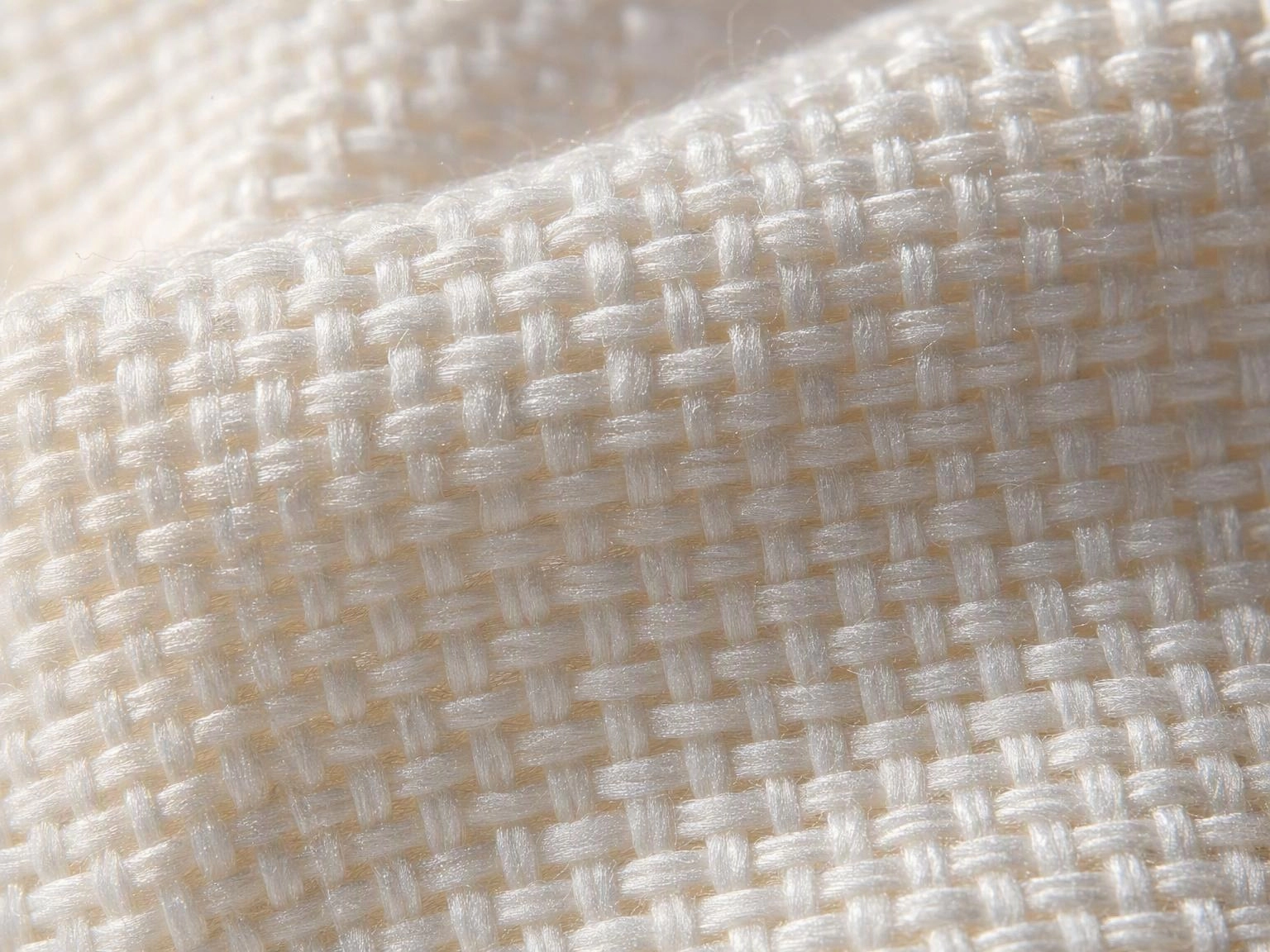
Yarn count describes the fineness of the individual yarn used to weave the fabric. In the indirect count system used for cotton, a higher number means a finer yarn. A 40s yarn is thicker than an 80s yarn, which is thicker than a 120s yarn.
Finer yarns require better raw cotton and more careful spinning, which is why count drives cost. They also allow the weaver to pack more threads into the same width, producing a denser, smoother surface.
Single-ply, two-ply and multi-ply
A single yarn can be twisted together with one or more companion yarns to make a plied yarn. Two 100s yarns twisted together become 100s/2; three 140s yarns become 140s/3. Plied yarns are stronger, more uniform, and they resist the "grin-through" problem where gaps open between threads.
In practice, a 100s/2 fabric will generally out-perform a 100s/1 fabric in strength, opacity and durability — and it typically costs more. The highest grades of dress shirting commonly use 100s/2 through 160s/3, with some lines extending to 200s and 300s constructions for very fine, very expensive cloth.
Thread Count: How Many Threads Per Inch
Thread count, or fabric density, is the number of warp and weft threads packed into a given width — usually expressed per inch. It is a function of both yarn fineness and how tightly the loom is set.
Two fabrics can share the same yarn count and still differ substantially in thread count. A denser fabric feels more substantial, drapes better and resists show-through. Over-density, on the other hand, can make fabric stiff and prone to splitting at the seams.
What Count Actually Predicts
| Property | As count increases |
|---|---|
| Surface smoothness | Improves |
| Lustre and drape | Improves |
| Cost per metre | Rises |
| Breathability | Generally improves at high counts |
| Abrasion resistance | Can decline if yarns become very fine |
| Ironing effort | Often decreases with fine, well-finished cloth |
The Common Misreading
A 120s single-ply fabric is not automatically superior to an 80s two-ply fabric. The plied 80s cloth may be stronger, more durable and better suited to daily uniform wear, while the 120s single offers a finer surface that looks more luxurious in a boardroom. For corporate uniform programs, plied construction at a moderate count usually delivers the best balance of appearance, longevity and cost.
How to Read a Specification Line
A specification such as "100s/2 × 100s/2, 144 × 76" tells you the warp and weft yarns are both two-ply 100s, and the fabric carries 144 warp threads and 76 weft threads per inch. From that single line an experienced buyer can estimate weight, hand feel and roughly where the fabric sits in the market.
Choosing for Your Program
- Executive and hospitality lines: 100s/2 to 140s/2 for a refined surface and strong drape.
- General corporate uniform: 60s/2 to 100s/2 balances appearance, durability and budget.
- Heavy-duty and industrial: 40s to 60s, often in twill or oxford, for maximum service life.
- Premium non-iron: 80s/2 to 120s/2 with liquid ammonia and easy-care finishing.
Ask for the Real Numbers
Request the yarn count, ply, density, weight and finishing route for any fabric you consider, plus the corresponding test report. Suppliers who can quote those figures precisely are usually the ones whose production you can rely on.
Guangdong Fuxin Textile Technology Co., Ltd. weaves high-count, high-density shirting from 32s through to 300s/6 multi-ply yarns, with an annual capacity of approximately 15 million metres. Our technical team can provide full construction data and samples for evaluation against your uniform specification.