A Garment Worn by Children Has Different Rules
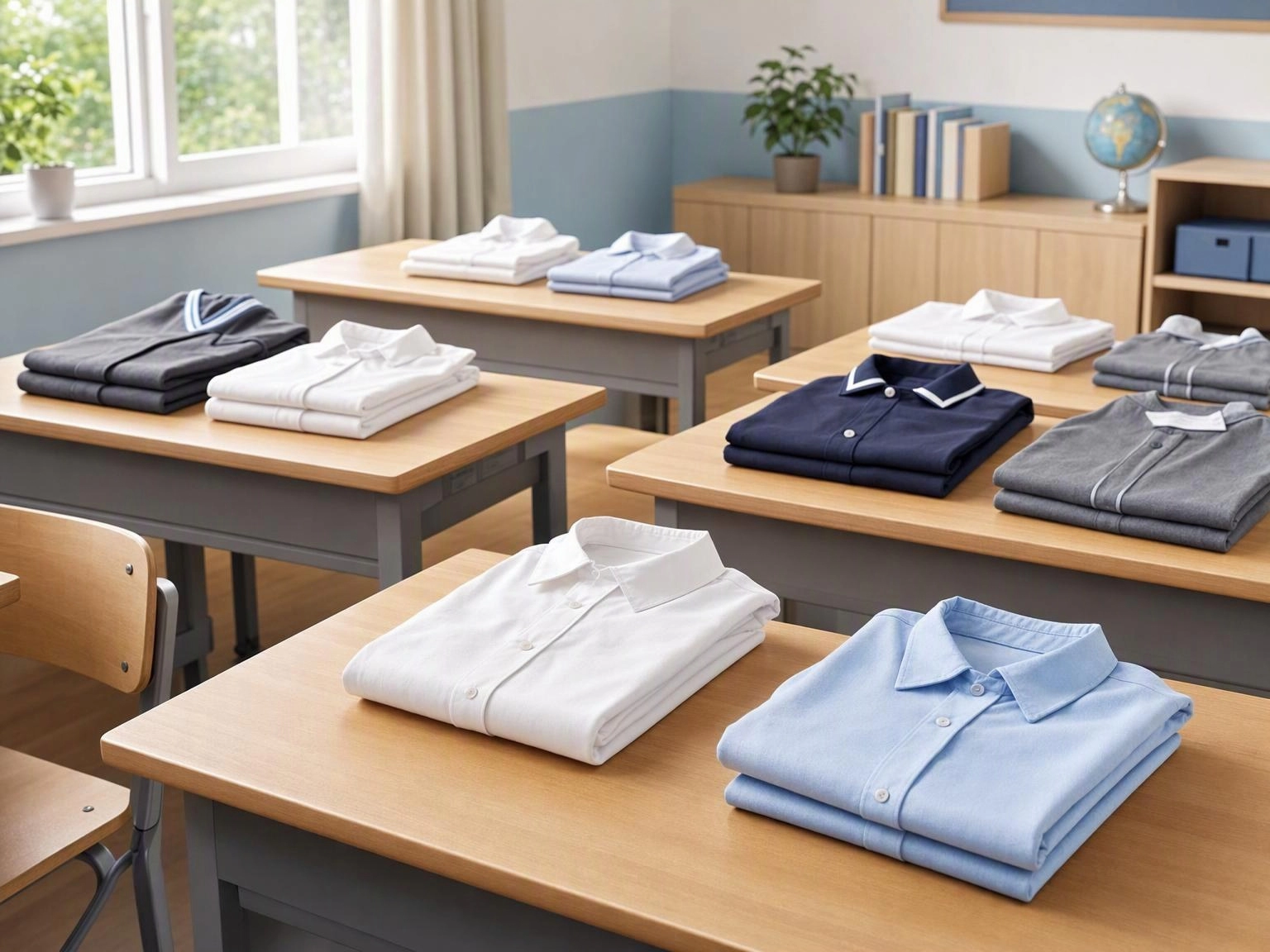
School uniform shirting sits in a uniquely demanding category. It is worn by children and teenagers, which brings textile safety regulations into play. It is washed constantly, often at home with whatever detergent is available. It must survive a growth spurt without becoming unwearable. And it is purchased in volume by schools operating under tight budget constraints. Getting the fabric specification right requires balancing all four pressures.
Safety Comes First
Textile safety norms for children's apparel typically regulate several parameters. When specifying school shirting, confirm the following are tested and documented:
- Formaldehyde content, which is restricted in direct skin-contact garments for children.
- pH value within the acceptable skin-contact range.
- Azo colourants and other restricted dye substances.
- Heavy metals where applicable in the finishing chemistry.
- Colourfastness to perspiration and saliva for younger age groups.
Ask for test reports issued by an accredited laboratory, and confirm they relate to the actual production batch rather than a development sample. Schools and parent associations are increasingly well informed on these points, and a documented compliance record is a competitive advantage in a tender.
Low Shrinkage Is Non-Negotiable
Parents buy uniforms to last a school year, sometimes longer. A shirt that shrinks noticeably after five washes is a complaint generator, and in a program with thousands of students it becomes an administrative burden.
Targets to write into the specification:
| Parameter | Recommended target |
|---|---|
| Warp shrinkage after 5 washes | Within ±2% |
| Weft shrinkage after 5 washes | Within ±2% |
| Colourfastness to washing | Grade 4 minimum |
| Colourfastness to rubbing | Grade 3–4 minimum |
| Colourfastness to perspiration | Grade 4 minimum |
Preshrinking and mechanical compaction during finishing are the main levers. Confirm that the mill applies them rather than relying on relaxed drying alone.
Comfort Through a Full School Day
Children spend seven or more hours in a uniform, often in classrooms that are warm in summer and cool in winter. Breathability and moisture handling matter more than premium appearance.
- Cotton-rich constructions with a moderate polyester content for wrinkle resistance work well for most climates.
- Lightweight plain weave or oxford constructions balance comfort with durability.
- Pure cotton offers the best breathability but creases heavily and needs careful shrinkage control.
- Moisture-wicking finishing is a worthwhile addition in hot and humid regions.
Durability Under Realistic Washing
Home laundering by families is less controlled than institutional laundry. Detergents vary, temperatures vary, and drying methods vary. Fabric must tolerate that variability.
The practical defences are higher yarn strength, generous fabric weight, colour dyes with strong washing fastness, and construction that resists pilling. Heavily pilled fabric looks worn long before it structurally fails, and appearance is what drives replacement in a school context.
Pilling resistance
Pilling occurs when loose fibres work to the surface and tangle into small balls. It is more common in fabrics with shorter staple fibres and in loose constructions. For school shirting, specify a pilling grade of at least 3–4 on the standard scale and verify it with testing on the production batch.
Buying Enough Fabric at the Right Cost
School uniform programs are price sensitive, and fabric is usually the largest single cost component. Ways to control cost without sacrificing the parameters above:
- Standardise on two or three fabric constructions across year groups rather than many.
- Use cotton-rich blends rather than pure long-staple cotton for general year groups.
- Reserve premium fabric for ceremonial or senior uniforms.
- Order on a planned cycle so the mill can schedule production efficiently.
- Confirm colour consistency arrangements for repeat orders across academic years.
Teacher and Staff Shirting
Staff uniforms in the same program usually warrant a different specification. Teachers and administrative staff typically need a more formal appearance, better wrinkle recovery and higher colourfastness, since their garments are worn repeatedly in public-facing contexts. A slightly higher-count construction with easy-care finishing is usually appropriate, and where the budget allows, the same fabric can be used for senior students to create visual cohesion.
Fuxin Textile for Institutional Programs
Guangdong Fuxin Textile Technology Co., Ltd. produces woven shirting for school, teacher and institutional uniform programs, with in-house laboratory testing covering colourfastness, breaking strength, shrinkage and pilling. We can supply the test documentation required for textile safety compliance, and develop fabric against the technical parameters specified in a tender. Contact our team with your age group, climate and budget parameters and we will propose suitable constructions with samples.