Comfort Is a Productivity Issue
In hot and humid conditions, uniform discomfort stops being a minor annoyance and becomes a performance problem. Staff working outdoors, in warehouses, on transport platforms or in unconditioned buildings lose concentration, take longer breaks and complain more. Fabric choice is one of the few levers a procurement team can pull that improves comfort without changing the design or the budget dramatically.
How Moisture-Wicking Actually Works
All fabrics move moisture, but they do it in two different ways.
- Absorption is what cotton does. The fibre takes water into its structure, which feels comfortable initially but becomes heavy and slow to dry once saturated.
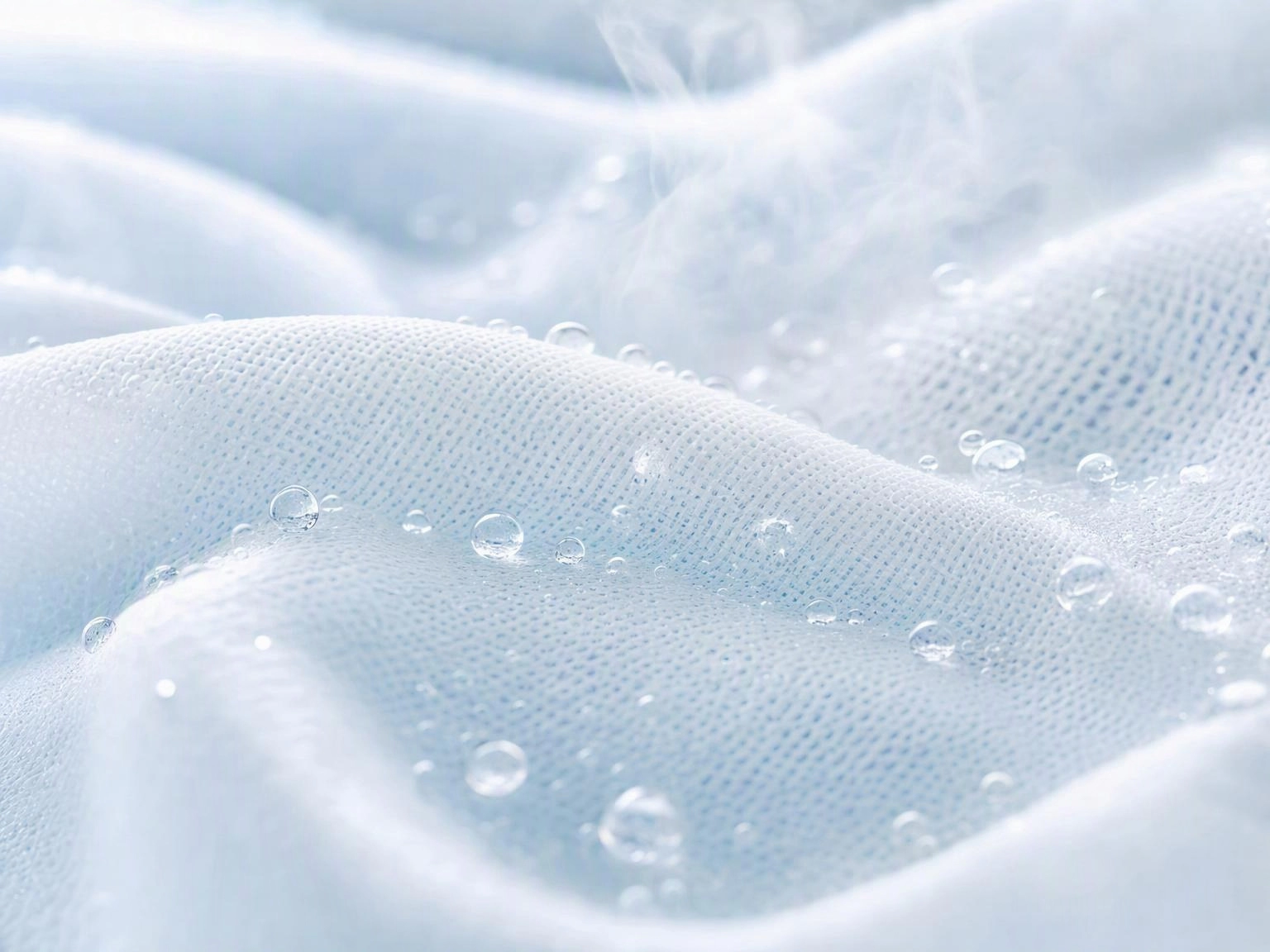
- Wicking moves liquid moisture along the fibre surface and through the fabric structure to the outer face, where it can evaporate. Wicking fabrics dry faster and feel lighter against skin.
Modern uniform shirting generally combines both mechanisms. A cotton-rich structure provides absorbency and comfort, while a wicking finish or a proportion of engineered fibre accelerates transport and drying.
Cooling Finishes and Cool-Touch Fabric
Beyond moisture transport, some fabrics incorporate cool-feel finishing. These treatments increase the rate at which heat is drawn away from skin on contact, producing an immediate cooling sensation when the garment is put on or when airflow increases. The effect is real but time-limited; it supplements rather than replaces good moisture management.
Air permeability matters just as much. A tightly woven fabric with excellent wicking but poor permeability still traps humid air. Look for both metrics when evaluating samples for hot-climate roles.
Matching Fabric to Working Conditions
| Environment | Fabric priority |
|---|---|
| Outdoor, direct sun, high humidity | High air permeability, fast drying, UV protection, light colours |
| Warehouse and logistics | Abrasion resistance plus moisture transport, moderate weight |
| Transport and platform staff | Colour stability under repeated laundry, structure retention, wicking |
| Kitchen and food service | Moisture management plus antibacterial treatment, industrial-wash durability |
| Office in warm climate | Lightweight cotton or cellulose blend with easy-care finishing |
Fabric Weight: The Counter-Intuitive Rule
Buyers often assume lighter is always cooler. Up to a point that is true, but very light fabric clings, shows perspiration and loses shape. For hot-climate workwear, a mid-weight construction of roughly 110 to 140 grams per square metre frequently outperforms a very light cloth because it keeps the fabric off the skin, allows air circulation and retains its structure through repeated washing.
What to Test Before Ordering
- Moisture management test — confirm the fabric's wicking and drying performance is measured, not asserted.
- Air permeability — a simple but highly predictive comfort indicator.
- Colourfastness to light — essential for outdoor roles where fading is the main complaint.
- Colourfastness to washing and rubbing — uniforms are washed often and worn against equipment.
- Shrinkage after repeated laundering — a garment that shrinks out of fit is unusable regardless of how well it breathes.
- Actual wear trial in the target environment — two weeks with real staff in real conditions.
Design Choices That Support the Fabric
Fabric alone will not solve comfort. Light colours reflect heat and reduce perceived temperature significantly. A relaxed body fit with a back yoke vent increases airflow. Choosing a slightly looser collar and avoiding tight cuffs improves ventilation at the extremities. Where the role allows, mesh panels at the underarm and back dramatically improve airflow at low cost.
Cost and Longevity
Functional finishes add cost, typically in the range of 5 to 15 percent over a standard construction. That premium is usually recovered within the first replacement cycle, because garments that stay comfortable are worn properly, washed correctly and replaced less often. Performance fabric also tends to maintain its colour and shape longer, which keeps the uniform looking consistent across the workforce.
Ask for Samples That Match Your Climate
Guangdong Fuxin Textile Technology Co., Ltd. develops moisture-wicking, cool-feel and breathable shirting alongside antibacterial and UV-resistant constructions. We supply fabric for transport, corporate and industrial uniform programs and can provide performance data and wear-test samples matched to your specific working environment. Share your climate, role profile and laundry conditions, and our technical team will propose a fabric direction.