Why Fabric Choice Decides the Fate of a Uniform Program
A corporate uniform program is a multi-year commitment. Once a fabric is approved and a supplier is locked in, every shirt issued to every employee carries that decision with it. Getting the fabric right keeps the program quiet and predictable. Getting it wrong produces a steady stream of complaints about fading, shrinking collars, and shirts that look tired after six months.
This guide walks through the variables that actually matter when specifying shirting for corporate wear, from yarn construction through to the tests you should insist on before release.
Start With the Wearer, Not the Fabric
Before looking at a single swatch, define how the shirt will be used. The same company can need very different fabrics for a head-office reception team and a field engineering crew.
- Indoor, client-facing roles. Appearance leads. Prioritise lustre, drape and a crisp collar that holds shape through a long day.
- Outdoor and transport roles. Comfort and abrasion resistance lead. Breathability, moisture management and colour stability under repeated laundering matter more than a fine hand feel.
- Industrial and workshop roles. Durability leads. Look for higher tear and tensile strength, plus wash-down performance that keeps the garment serviceable.
- Healthcare and food service. Hygiene and industrial laundry cycles lead. Specify treatments and colourfastness that survive high-temperature washing.
The Specification Variables That Matter
Yarn count
Yarn count tells you how fine the individual yarns are — the higher the count, the finer and usually more expensive the yarn. Shirt fabrics commonly sit between 40s and 140s, with two-ply and three-ply constructions at the premium end. Higher counts give a smoother surface and a more refined look; lower counts generally give more body and durability at a lower cost. For most corporate programs, the practical sweet spot is a 60s to 100s two-ply construction, unless the program is explicitly a premium hospitality or executive line.
Weave and construction
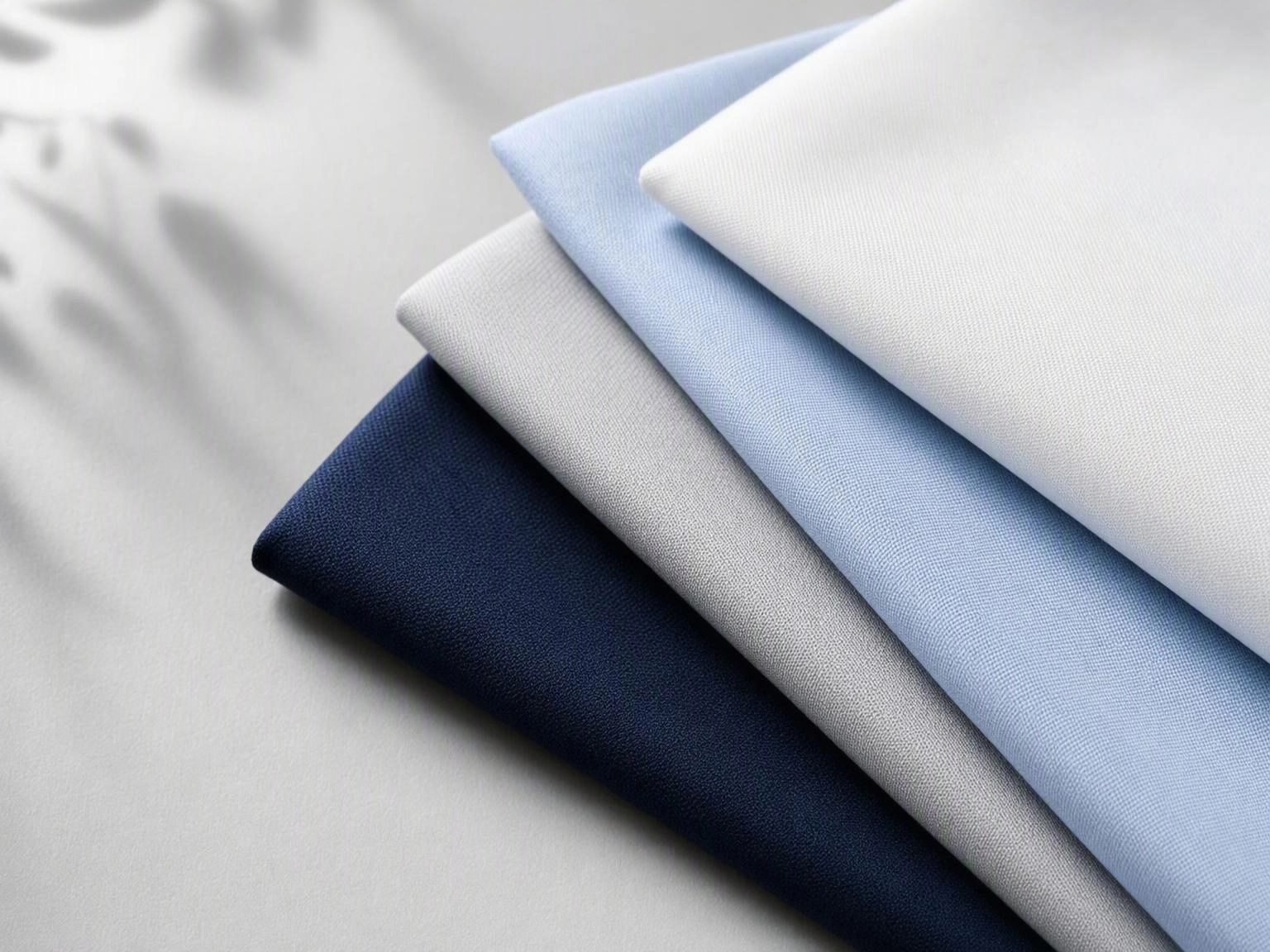
Poplin gives a smooth, formal finish and works well under a jacket. Twill offers more opacity and better drape. Oxford weaves are heavier and more casual, and they hide creasing well in hard-wearing environments. Herringbone, dobby and jacquard structures add visual texture without changing the underlying performance profile much.
Fibre blend
Pure cotton gives comfort and breathability but creases. Cotton-rich blends such as CVC improve wrinkle recovery with modest breathability loss. Poly-cotton blends such as TC prioritise durability and cost, and they are common in high-laundry environments. Regenerated cellulose blends — bamboo, modal and lyocell — offer softness and moisture handling with a strong sustainability story.
Finishing
Liquid ammonia and easy-care finishing transform the wear experience of cotton shirting. Treated fabric holds shape better, resists creasing through a working day, and launders with far less ironing. For programs where staff press their own shirts, this is often the single highest-value upgrade available.
Numbers You Should Ask For Before Approval
Request batch test data, not general claims. The following give you a defensible basis for approval:
- Colourfastness to washing and to rubbing — critical for any program with a corporate colour.
- Dimensional stability after laundering, expressed as a shrinkage percentage in warp and weft.
- Tensile and tear strength.
- Pilling resistance.
- Formaldehyde and pH where textile safety norms apply.
Ask for these per batch, not once per season. Fabric that passed in the first delivery and drifted in the third is one of the most common failure modes in large uniform rollouts.
Cost Is Not Price Per Metre
A cheaper fabric that fades after twenty washes, or that shrinks enough to break the size curve, costs more than a premium fabric that survives the full contract term. Build a simple total-cost model that accounts for replacement rate, laundry damage, and the staff time lost to sorting out replacement garments. In most programs we review, the true cost of a low-grade fabric is 30 to 60 percent higher than its purchase price suggests.
Practical Steps to a Low-Risk Decision
- Define wearer groups and their real working conditions.
- Narrow to two or three fabric constructions rather than a long list.
- Request physical samples, and where possible wear-test them for two weeks with actual staff.
- Confirm test data for the exact batch you will receive.
- Approve a sealed sample and treat it as the contractual reference.
Where Fuxin Textile Fits
Guangdong Fuxin Textile Technology Co., Ltd. has focused on woven shirting since 2014, producing high-count, high-density fabric for corporate uniforms, transport and institutional workwear. Our mill integrates weaving, dyeing and finishing with in-house laboratory testing, and we support OEM and ODM development from colour card creation through to bulk delivery. If you are building a uniform specification and want fabric options with test data attached, our team can prepare samples and a technical proposal for your brief.