How a Uniform Dies Before Its Time
Most uniforms are retired because they look worn, not because they have structurally failed. Colour has faded unevenly, the fabric has gone fuzzy at friction points, collars have lost their shape, or the garment has slowly shrunk out of fit. Almost all of these outcomes are influenced by how the garment is washed, dried and pressed. Care guidance is one of the cheapest interventions available in a uniform program, and it is routinely overlooked.
The Four Forces That Age Fabric
- Heat. The single largest accelerator of colour loss, shrinkage and fibre degradation.
- Chemistry. Aggressive detergents and chlorine bleach attack dyes and fibres.
- Mechanical action. Agitation causes surface fuzzing and pilling and stresses seams.
- Time under tension. Prolonged drying and pressing at high temperature permanently set distortions.
Every care recommendation below is a way of reducing one or more of these forces.
Washing
Temperature
Wash at the lowest temperature that satisfies your hygiene requirement. For general uniform shirting, 30 to 40°C is adequate in most cases and dramatically gentler on colour and fibre than 60°C. Reserve higher temperatures for areas with genuine hygiene requirements, such as healthcare and food handling.
Detergent
Use a mild, colour-safe detergent. Avoid chlorine bleach entirely; oxygen-based stain removers are far kinder to reactive dyes and will not yellow white fabric the way chlorine does on repeated use. Fabric softener should be avoided on functional fabrics because it coats fibres and reduces moisture-wicking and antibacterial performance.
Load size
Overloading is one of the most common causes of premature wear. Garments need space to move; a crowded drum increases friction and leaves detergent residue behind. Underloading wastes water and energy but does not damage fabric.
Before washing
- Close all buttons and fasten the collar to maintain shape.
- Empty pockets completely — pens, keys and clips cause localised abrasion.
- Remove detachable items such as ties, name badges and belt clips.
- Treat stains promptly; a stain set by washing is significantly harder to remove later.
- Pre-treat collars and cuffs, which accumulate body oils from skin contact.
Drying
Tumble drying
Tumble drying at high heat is the second biggest cause of garment damage after chlorine bleach. High heat shrinks cotton, degrades easy-care resin finishes and embrittles fibres over time. If tumble drying is necessary, use a low-heat or gentle cycle and remove garments while slightly damp.
Air drying
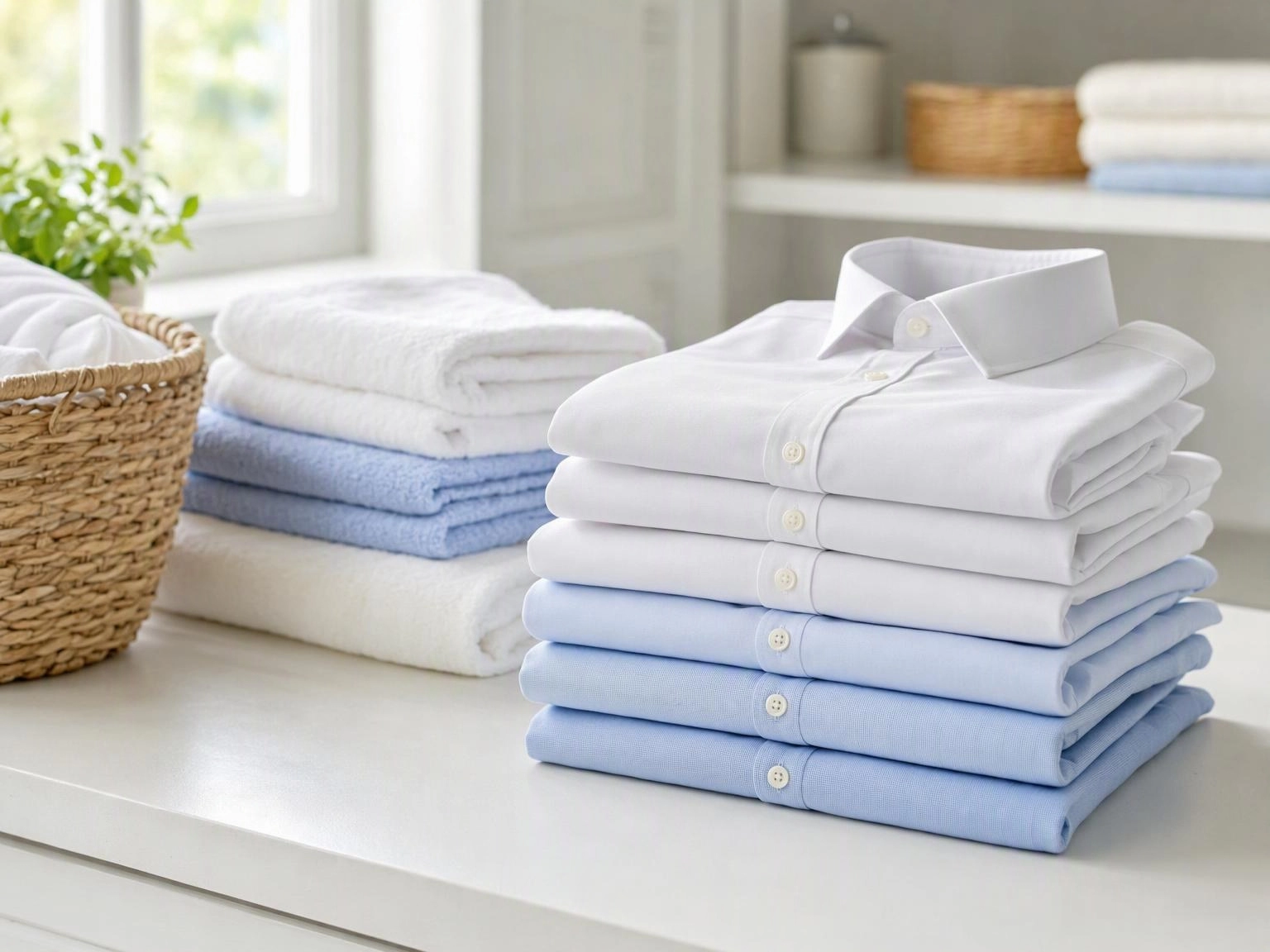
Line or rack drying is far gentler and costs nothing. Dry in shade where possible, since direct sunlight accelerates colour fading — particularly relevant for deep shades. Hang shirts on a shaped hanger to reduce the pressing required afterwards.
Avoid over-drying
Over-drying is the most common mistake in laundry rooms. Fabric that is bone dry has lost more moisture than necessary and will require more aggressive pressing to recover, compounding the damage. Remove slightly damp and finish on the hanger.
Pressing and Finishing
- Check the care label for the maximum iron temperature, and stay below it.
- Press on the reverse side where possible to protect the fabric face and any lustre finish.
- Use steam rather than high dry heat to relax creases.
- Avoid pressing directly over seams, buttons or fusing, which can cause glazing and shine marks.
- Do not press soiled or stained fabric — heat sets stains permanently.
- Allow garments to cool completely before hanging to avoid setting creases into the fabric.
Care Guidance by Fabric Type
| Fabric | Wash | Dry | Iron |
|---|---|---|---|
| 100% cotton, liquid ammonia finish | 30–40°C, mild detergent | Line dry or low tumble | Warm, reverse side |
| Cotton-rich (CVC) | 30–40°C, colour-safe | Line dry preferred | Warm |
| Poly-cotton (TC) | 40°C, mild | Low tumble is acceptable | Cool to warm |
| Poly-viscose (TR) | 30°C, gentle | Hang immediately; viscose loses strength wet | Warm, reverse side |
| Bamboo, modal, lyocell blends | 30°C, gentle, no wringing | Line dry in shade | Warm, low steam |
| Antibacterial and wicking finishes | 30–40°C, no softener | Low heat only | Warm |
Storage and Rotation
Storage is an underrated factor in uniform life. Garments stored compressed in a damp environment crease permanently and can develop mildew. Provide staff or the laundry with:
- Shaped hangers rather than wire hangers, which distort shoulders.
- Adequate spacing so garments are not crushed.
- A dry, ventilated storage area.
- Protective covers for long-term storage of seasonal items.
Rotation is equally valuable. Giving a garment a recovery day between wears roughly doubles its service life compared to wearing the same shirt on consecutive days without laundering. Where uniform budgets allow, issuing three shirts instead of two reduces total replacement cost over a contract term.
Writing It Into the Program
- Confirm the care label matches the actual fabric and finish — not a generic template.
- Provide a one-page care card with each garment, in the wearer's language.
- Brief the laundry team or cleaning contractor on the fabric types in use.
- Reduce wash temperature and eliminate chlorine bleach wherever hygiene permits.
- Review complaints after six months and adjust care guidance accordingly.
Fuxin Textile's Support
Guangdong Fuxin Textile Technology Co., Ltd. supplies woven shirting for corporate, transport, hospitality and institutional uniform programs and provides fabric care and maintenance guidance alongside our products. If you are building or revising a uniform program, our technical team can advise on care parameters matched to the specific constructions you select. Contact us with your fabric list and laundering arrangements.